
Fire hydrant systems
Water at the right pressure, at the furthest outlet, the moment it is needed.
WATERWEB designs and installs complete hydrant systems, from internal wet risers and downcomers to external ring mains, hose reels, fire pump houses and dedicated fire water storage, then tests and maintains them to Indian Standards for the life of the installation.
Overview
A hydrant system places a pressurised water supply at fixed points across a building or site, so that trained occupants and the fire service can bring hose streams to bear within minutes of an alarm, independently of the municipal supply and of the building's normal power.
Its effectiveness is decided long before a fire. Pump selection, pipe sizing, water storage and the pressure available at the hydraulically most remote outlet determine whether the system can deliver the flow firefighters need. Equally, a valve left closed after maintenance or a diesel pump that fails to start can defeat an otherwise sound installation. WATERWEB addresses both: rigorous engineering at the design stage, and disciplined testing for the life of the system.
~70%
of fire pump-related losses in FM Global's loss history involved pumps that were already impaired or were not started in time. The failure was one of readiness, not design.
How it works
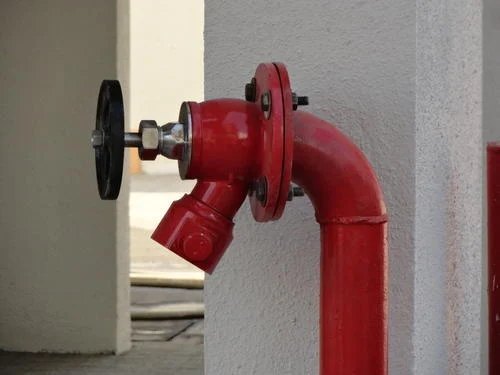
The network is kept permanently charged and pressurised. A jockey pump compensates for minor leakage, so the main pumps are not started unnecessarily. When a landing valve or hydrant is opened, the resulting pressure drop starts the electric main pump automatically at its preset pressure. Should the electric pump fail or mains power be lost, a diesel-driven standby pump of equal capacity starts at a lower set point. External mains are laid as rings, so that every hydrant can be fed from two directions and supply is preserved when a section is isolated.
Key components
- Fire water storage
- Dedicated underground and terrace reserves, sized by occupancy and building height under NBC 2016.
- Electric main pump
- The duty pump, delivering the design fire flow at rated head.
- Diesel standby pump
- Matching capacity, independent of mains power, with fuel for sustained operation.
- Jockey pump
- Maintains network pressure and prevents nuisance starts of the main pumps.
- Wet riser or downcomer
- The vertical main serving landing valves on every floor.
- Landing valves and hose
- Firefighting outlets, with hose lengths that reach every part of the floor.
- Hose reels
- First-response hose for trained occupants, drawn from the riser.
- Fire service inlet
- Allows fire tenders to pump directly into the system.
- External ring main
- A looped yard main serving external hydrants around the site.
Configurations
| Type | Application |
|---|---|
| Wet riser | A permanently charged vertical main for taller buildings, fed by the main fire pumps. |
| Downcomer | Fed from a terrace tank through a terrace pump; suited to mid-rise buildings. |
| Wet riser-cum-downcomer | Connected to both the terrace tank and the main pumps, for additional resilience. |
| External ring main | Looped yard hydrants for industrial sites, plants and campuses. |
Engineering considerations
Remote-point pressure
NBC 2016 sets a minimum of 3.5 kg/cm² at the remotest location. WATERWEB verifies it by calculation, then proves it by flow test.
Pump configuration
Duty and standby capacities are matched, and pump sets are selected from the NBC 2016 schedule for the building type.
Water storage
Dedicated fire reserves, sized to the code and protected from drawdown for domestic use.
Hydrant spacing
Yard hydrant spacing reduced around high-hazard areas, in line with IS 13039.
Pump house
Layout, clearances and flooded suction arranged for reliable starting and safe maintenance access.
Fire service access
Inlets and hydrants coordinated with fire tender access routes.
Typical applications
- Most buildings above 15 m, and all high-rise buildings (21 m and above in Karnataka)
- Industrial facilities, warehouses and plants, as an external hydrant network
- Hospitals, hotels, retail and assembly occupancies, subject to height and floor area
- Wherever required by the fire authority or the insurer
Requirements by height, occupancy and floor area are set out in NBC 2016, Part 4.
Scope of delivery
Survey and design
Hydrant layout and pipe sizing on computer-aided design (CAD) drawings, verified by hydraulic calculation.
Pump house
Electric main, diesel standby and jockey pumps, with associated controls.
Installation
Pipework, landing valves, hose reels and external hydrants.
Testing and commissioning
Hydrostatic and flow testing, with a complete handover dossier.
Maintenance
Scheduled pump runs, valve inspections and flow tests.
Owner responsibilities
Most inspection findings trace back to simple checks missed between service visits. The items below fall to the owner; every WATERWEB maintenance report adds the checks specific to the site.
- Run the diesel pump weekly and record the test
- Keep hydrant valves and hose reels unobstructed
- Maintain the fire water tank at full capacity and record levels
- Keep the pump house secured, well lit and accessible
- Report any leakage or loss of pressure promptly
- Notify WATERWEB before any extension or change of use
Industries served
View projects
Manufacturing and engineering
Heavy engineering, automotive, paper and pharmaceutical facilities.

Commercial and residential buildings
Offices, residential towers, hotels and hospitals that must hold a fire no-objection certificate.
Power and utilities
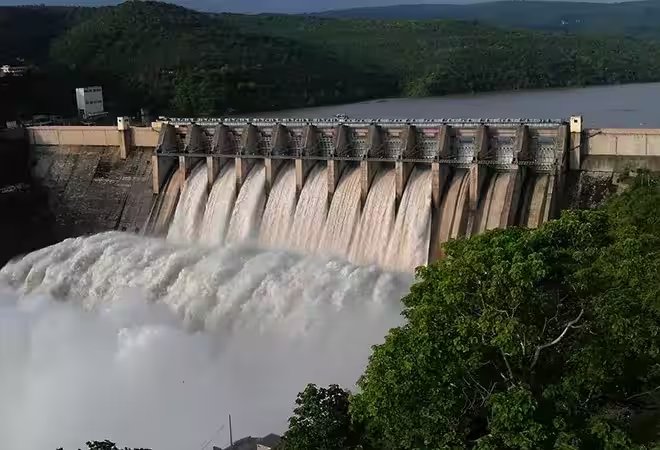
Hydroelectric and thermal generating stations, substations and transformer yards.
Frequently asked questions
What is the difference between a wet riser and an external hydrant?
A wet riser is a vertical pipe within the building, with landing valves at each floor. External hydrants are located around the building or facility perimeter. Most sites require both.
Why does a hydrant system require three pumps?
The jockey pump maintains system pressure against minor leakage. The electric main pump delivers the design fire flow, and the diesel pump provides standby capacity if mains power fails.
How often should a hydrant system be tested?
Indian Standards call for frequent routine inspection of industrial hydrant systems, with pressure and output tests at regular intervals. NFPA 25 adds weekly diesel pump runs and an annual full-flow pump test. WATERWEB sets a site-specific schedule that satisfies the governing code and the insurer.
Can an existing hydrant system be upgraded rather than replaced?
In many cases, yes. WATERWEB first tests the existing pipework and pumps, then designs only the upgrades required by the code and the fire authority.
Planning a new facility, or assessing an existing system?
A WATERWEB engineer will review your drawings or survey the site, assess it against the governing code and set out recommendations in writing.