
Water spray systems
Fixed deluge protection for oil-filled equipment and high-hazard plant.
WATERWEB engineers high- and medium-velocity water spray systems for transformers, reactors, fuel handling, conveyors, cable galleries and storage tanks, wherever a rapid, total application of water is needed to extinguish a fire or protect adjacent plant.
Overview
Some hazards cannot wait for sprinklers to open one at a time. A ruptured transformer or a burning conveyor belt can be fully involved within moments. Water spray systems respond by discharging through every nozzle in the protected zone at once, delivering a designed application rate over the full surface of the equipment.
In India, the CEA requires automatic fire protection for every transformer rated 10 MVA and above and every reactor rated 10 MVAr and above, so fixed protection is a regulatory obligation for utilities and heavy industry, not just an engineering choice. WATERWEB designs these systems to IS 15325 and, where specified, NFPA 15, and to the technical specification of the utility or insurer.
10 MVA
is the transformer rating from which India's Central Electricity Authority requires an automatic fire protection system.
How it works
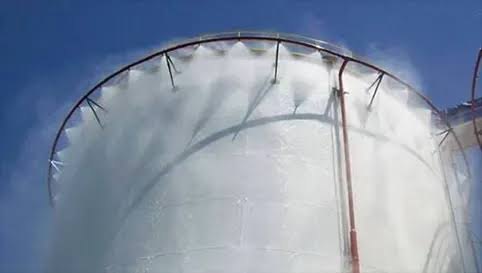
Open nozzles are arranged around the protected equipment on a dry pipe network, held behind a deluge valve. A detection line of heat-sensitive bulbs, or electrical detectors, surrounds the hazard. When a detector operates, the deluge valve opens and water discharges from every nozzle in the zone simultaneously. High-velocity projectors deliver coarse, fast-moving droplets that emulsify, cool and smother burning oil; medium-velocity sprayers produce a finer spray that controls fire and cools exposed vessels and structures.
Key components
- Deluge valve
- Holds the network dry and opens on a detection or manual signal.
- Detection line
- Heat-sensitive bulbs or electrical detectors positioned around the hazard.
- High-velocity projectors
- For oil-filled transformers and other equipment containing high-flash-point oil.
- Medium-velocity sprayers
- For exposure cooling of tanks, vessels, structures and conveyors.
- Ring mains and strainers
- Distribute water evenly and keep small orifices clear of debris.
- Manual release and alarms
- Local and remote operation, with status signalling to the control room.
- Oil containment
- Soak pits and drainage sized for spilled oil and discharged water.
Configurations
| Type | Application |
|---|---|
| High-velocity water spray (HVWS) | Extinguishment of oil fires, principally on transformers, reactors and lubricating oil systems. |
| Medium-velocity water spray (MVWS) | Fire control and exposure protection for cable galleries, conveyors, fuel-oil areas and storage tanks. |
Engineering considerations
Application rate
Water applied over the full surface of the equipment at the rate the standard specifies for the hazard.
Electrical clearance
Nozzles and pipework positioned to maintain safe clearances from live conductors and bushings.
Detection strategy
Set to respond to a genuine fire, not to an electrical protection event alone.
Water supply
Pump capacity and storage sized for the largest single hazard and its required duration.
Drainage and containment
Oil and water managed so that burning oil cannot spread to adjacent equipment.
Outdoor durability
Nozzle selection and pipe protection suited to weather, dust and nesting birds.
Typical applications
- Oil-filled transformers and reactors
- Diesel generator sets and fuel day tanks
- Cable galleries, conveyors and coal handling plants
- Storage tanks and process equipment exposed to fire
Power utilities and insurers commonly specify water spray protection for equipment above a defined oil capacity.
Scope of delivery
Hazard study
Equipment to be protected, application rates and coverage.
Design
Nozzle layout, deluge valve and detection logic.
Installation
Ring mains, nozzles, deluge valves and detection.
Testing
Full discharge test, with verification of nozzle coverage.
Maintenance
Nozzle cleaning, deluge valve trip tests and detector testing.
Owner responsibilities
Most inspection findings trace back to simple checks missed between service visits. The items below fall to the owner; every WATERWEB maintenance report adds the checks specific to the site.
- Keep nozzles free of paint, dust and bird nests
- Keep the deluge valve set and its surroundings accessible
- Record every system operation and false trip
- Notify WATERWEB when protected equipment is relocated or replaced

Frequently asked questions
Is water spray safe on an energised transformer?
High-velocity water spray is an established protection method for oil-filled transformers worldwide. Electrical clearances, nozzle type and operating pressure are engineered so that the spray does not form a conductive path. Each installation requires a specific design review.
How is a water spray system activated?
Typically by heat detectors or a pilot line of sprinkler bulbs around the protected equipment; when one operates, the deluge valve opens. Manual release is provided locally and, where required, from the control room.
Should a transformer have water spray or nitrogen injection?
They serve different purposes. Nitrogen injection acts inside the tank to prevent a fire developing after an internal fault; water spray extinguishes a fire that has broken out and protects nearby plant. CEA standards provide for both on larger transformers.
Planning a new facility, or assessing an existing system?
A WATERWEB engineer will review your drawings or survey the site, assess it against the governing code and set out recommendations in writing.