
Design and engineering
Every system engineered before it is built.
WATERWEB's in-house design team takes fire protection from design basis to tender documentation, calculating every system to national and international codes. It works with owners, architects, government departments and mechanical, electrical and plumbing (MEP) consultants.
Overview
A fire protection system's performance is largely settled on the drawing board. Hazard classification, water supply, pump selection, pipe sizing and the coordination of pipework with every other building service decide whether it will work when called on, and whether it can be installed and maintained economically.
WATERWEB's design practice draws on nearly five decades of installing and maintaining the systems it specifies. Designs are developed with an installer's understanding of what works on site, and a maintainer's understanding of what must remain accessible and testable for the life of the system.

How it works
Each commission begins with a fire protection design basis: the hazards, occupancy, applicable codes and performance objectives, agreed with the client and the approving authority. Detailed design follows in computer-aided design (CAD), supported by hydraulic calculations that verify flow and pressure at the most demanding point of every system. Designs are coordinated with structural and MEP services to resolve clashes before they reach site, and are issued with the specifications and bills of quantities needed for procurement.
Deliverables
- Fire protection design basis
- Hazards, codes and performance objectives, agreed at the outset.
- Detailed drawings
- Layouts, sections, schematics and details in CAD.
- Hydraulic calculations
- Flow, pressure and pump sizing verified for every system.
- Agent calculations
- Quantity, concentration and hold time for gaseous systems.
- Tender documentation
- Technical specifications and bills of quantities.
- Authority submissions
- Drawings and schematics prepared for fire authority approval.
- As-built records
- Record drawings and operation and maintenance manuals at handover.
Engagement models
| Model | Scope |
|---|---|
| Design only | Independent design and tender documentation, supporting competitive procurement. |
| Design and build | Single-point responsibility from concept to commissioning. |
| Design review | Assessment and value engineering of designs prepared by others. |
Engineering priorities
Code compliance
Designs referenced clause by clause to the governing standards.
Coordination
Pipework routed and clashes resolved with other services before installation.
Buildability
Details that installation teams can execute accurately on site.
Maintainability
Valves, test points and equipment located for safe, practical access.
Lifecycle cost
Systems specified for total cost of ownership, not initial price alone.
Future flexibility
Capacity and documentation that allow for a future change of use.
Typical applications
- New buildings and plant expansions
- Tender and specification packages for owners and consultants
- Upgrades of legacy systems to current codes
- Special hazards that call for a bespoke engineered design
Available as a design-only service or as part of a design-and-build contract.
Scope of delivery
Concept
Fire strategy and system selection.
Detailed design
Drawings developed and coordinated with the architect and other services.
Calculations
Each system verified for flow, pressure or agent concentration.
Tender documentation
Specifications and quantities issued for competitive procurement.
As-built
Drawings updated to show the system as installed.
Owner responsibilities
A design is only as sound as the information behind it. Three inputs from the owner set the basis for every drawing.
- Share current architectural and structural drawings
- Confirm the occupancy classification and any special hazards
- Identify the consultant or authority responsible for design approval
Industries served
View projects
Commercial and residential buildings
Offices, residential towers, hotels and hospitals that must hold a fire no-objection certificate.

Government, defence and research
Launch pads, aircraft hangars, missile launch centres and research facilities.
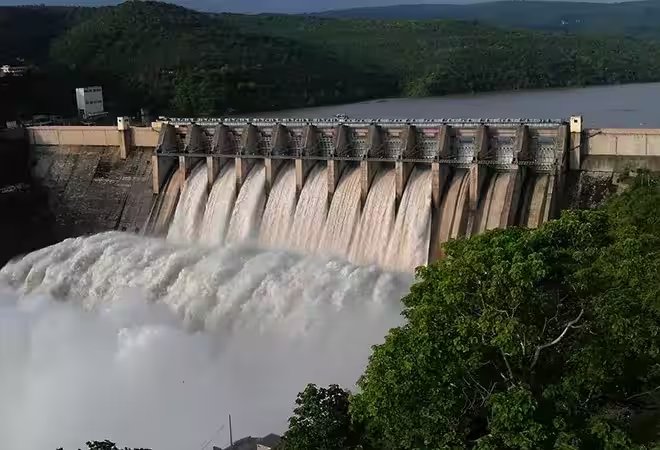
Power and utilities
Hydroelectric and thermal generating stations, substations and transformer yards.
Frequently asked questions
Does WATERWEB work alongside MEP consultants?
Yes. WATERWEB can deliver the fire protection package within the consultant's scope, or review and value-engineer an existing design.
Which software does WATERWEB use?
WATERWEB uses CAD for drawings and dedicated software for hydraulic calculations. [confirm software names].
Planning a new facility, or assessing an existing system?
A WATERWEB engineer will review your drawings or survey the site, assess it against the governing code and set out recommendations in writing.